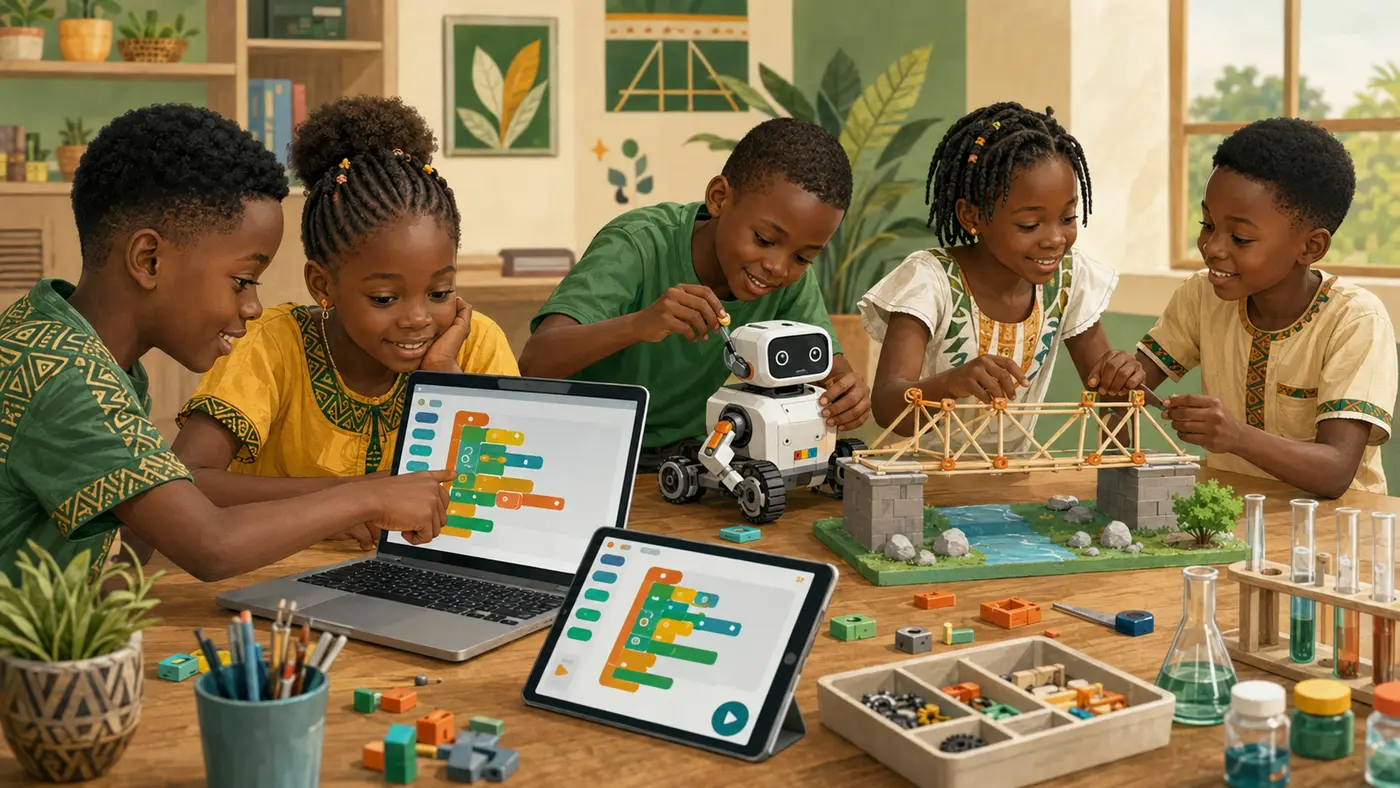
Children learn technology more deeply when they build with it. Coding is therefore the foundation of Gems: learners break a problem into steps, notice patterns, test an idea, correct mistakes and explain how their solution works. These habits support learning far beyond a computer screen.
Gems is a STEMS-focused learning and creation platform organised around a clear invitation: Learn. Create. Build. Shine. Coding opens the door to age-appropriate work in science, technology, engineering, Mathematics, artificial intelligence and creative digital projects.
The journey can begin without expensive equipment. Younger children can arrange instruction cards, guide a partner through a maze or identify a repeated pattern before moving to block-based coding. Older learners can design quizzes, interactive stories, simple web pages, data projects and useful applications.
Teachers and families can connect coding to the Cameroon curriculum. A learner might build a quiz about Cameroon rivers, collect rainfall observations, create an FCFA budget calculator, animate a locally researched story or design a digital explanation of a simple machine.
Online learning should remain purposeful and supervised. Adults should choose age-appropriate activities, protect personal information, set reasonable screen time and ask children to explain what they made rather than focusing only on the finished product.
Digital books, educational apps and guided activities support the coding pathway rather than replacing it. Young Builders use what they read and investigate to create projects, publish selected work safely and learn from feedback.
For Cameroon learners, locally meaningful problems can build both knowledge and confidence. Familiar names, places, languages, history, agriculture, transport, health and community needs give children material worth investigating and improving.
A coding project should begin with a learning purpose. A child may program a quiz to review Cameroon regions, animate a folktale after discussing its source, model the steps in a Science investigation or design a simple activity for younger learners. The code is a medium for reasoning and creation, not an objective by itself. Teachers and parents can ask what problem the learner is solving, which information must be checked and who the intended user will be.
Digital books can support reading when they are used actively. Before reading, learners can predict from the title or cover. During reading, they may identify unfamiliar words, explain a character’s decision or locate evidence. Afterwards, they can summarise, create a new ending or compare the text with another source. Animation and colour should not distract from comprehension. A useful platform gives children a reason to return to the ideas rather than merely swipe through screens.
Young creators need guidance on originality and attribution. They should not copy a picture, story or song from the internet and present it as their own. Adults can teach them to use permitted resources, credit a source in simple language and create new work from their own observations. When a community story or language is involved, identifying and respecting the person who shared it becomes part of digital citizenship. Creativity grows stronger when children understand that other people’s work also deserves respect.
Publishing requires privacy choices. A child’s full name, school, location, photograph or voice should not be shared publicly without appropriate adult consent and a clear reason. Projects can use a first name, initials, a creator name or no personal identifier where suitable. Comments and audience interaction need moderation. A safe platform should make the sharing level understandable so a private class activity does not become public accidentally.
The most valuable review asks the learner to explain the process. What was the first algorithm or plan? Which bug or design problem was difficult? What changed after testing? What would be improved in another version? These questions develop reflection and show whether the child made meaningful decisions. Gems can bring coding, STEMS investigations, books, apps and Young Builder projects together, but the deeper benefit comes when children see themselves as thoughtful makers and responsible contributors.
A balanced session can move from explore to create and then reflect. The learner examines a book or app, makes something with a clear purpose and explains the choices afterwards. Adults can save versions so progress becomes visible without comparing children unfairly. When the platform combines safe access, local relevance, originality and thoughtful feedback, screen time becomes more than entertainment. It becomes a space where children practise turning knowledge into useful, shareable work.
← Back to all articles