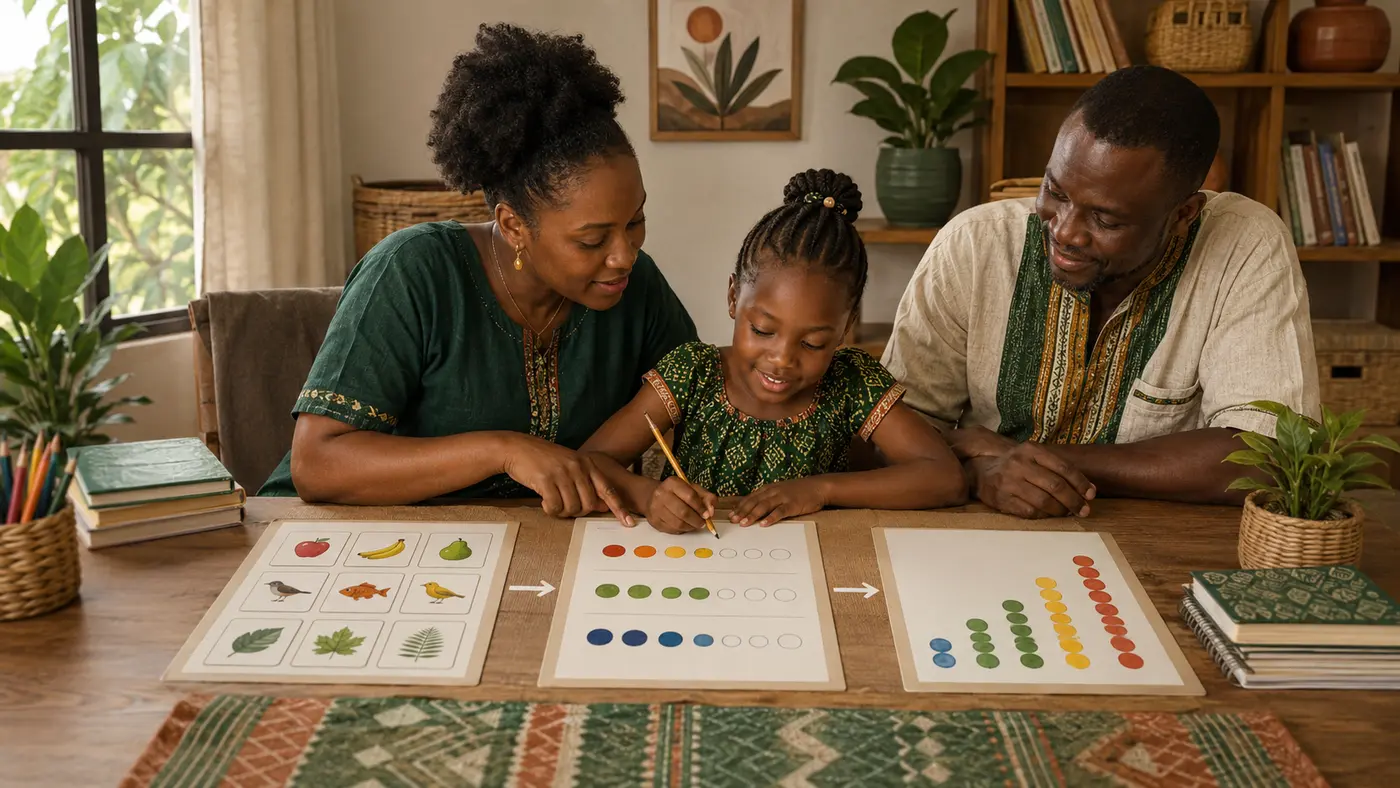
Home tutoring can easily become a second round of school: the teacher arrives, opens every exercise book, rushes through unfinished work and leaves without addressing the reason the learner is struggling. A stronger programme begins with a small plan. The plan does not need complicated educational language. It needs an honest starting point, a limited number of priorities, a realistic timetable and evidence that will show whether the learner is becoming more capable.
The first step is to gather useful information. Parents can share recent exercise books, tests, report comments and the school timetable. The home teacher should also speak with the learner and observe a few short tasks. A reading difficulty may come from weak phonics, limited vocabulary, rushing or poor comprehension. A Mathematics difficulty may involve number sense, calculation accuracy, misunderstanding the question or fear of making mistakes. The initial observation should identify patterns rather than attach labels to the child.
Choose two or three outcomes for the first four to six weeks. For example, a Class 2 learner may work towards reading a short familiar passage with fewer prompts, spelling ten high-frequency words and solving addition problems within 100. A Class 5 learner may need to identify the operation in word problems, show working clearly and check answers using estimation. Goals should describe something the learner will do, not vague wishes such as improve English or become intelligent.
A consistent session structure saves time and helps the learner know what to expect. The teacher can begin with a five-minute retrieval activity, teach or model one priority skill, guide practice, allow independent practice and end with a short review. Younger learners often benefit from movement, objects, pictures and shorter changes of activity. Older learners may need more time for reasoning and written work. The session length should match age, concentration and the difficulty of the task rather than an adult’s desire to cover everything.
Materials can remain simple. Bottle tops, number cards, reading passages, a small whiteboard, familiar FCFA examples and the learner’s own school materials may be enough for many primary goals. Digital activities can add variety where devices and internet are available, but the lesson should not collapse when data finishes. The home teacher should prepare the essential activity before arriving and avoid spending paid lesson time searching randomly for a worksheet on a phone.
Progress evidence should be small and regular. At the beginning, record what the learner can do independently. During each session, note one success, one repeated error and the next step. After several weeks, repeat a similar task rather than the exact same questions. Improvement may appear as greater accuracy, less prompting, better explanation, faster recall or increased willingness to attempt work. Not every change will immediately appear in the school average, but the evidence should show movement towards the agreed goals.
Parents have an important but limited role. They can protect the lesson time, provide a suitable space, ensure materials are available and encourage the child to complete short agreed practice. They should not interrupt every answer, compare siblings or demand that the teacher move far beyond the learner’s level. After the session, a two-minute summary is often enough: what was covered, what the learner managed and what should be practised. Longer concerns can be discussed separately from the child.
At the review point, decide whether to continue the same goals, adjust them, reduce support or recommend another form of help. A child who now reads the target passage independently should not remain on the same task merely because the family paid for a term. Good home teaching builds independence. The planned Douala agency will use simple learning plans and progress reviews so that families understand what the teacher is working towards and teachers remain accountable for purposeful sessions.
← Back to all articles